
By: Corey Steinman
The Amazon region is one of the most biodiverse areas in the world, functioning as a global climate stabilizer. It is also home to more than one million Indigenous people. Over time, the territory has faced difficult and complex changes, including government-sanctioned development projects to extract natural resources from the region and infrastructure development. The impacts from these shifts not only endanger the environment, but threaten the cultural survival of the many Indigenous people who call the Amazon home.
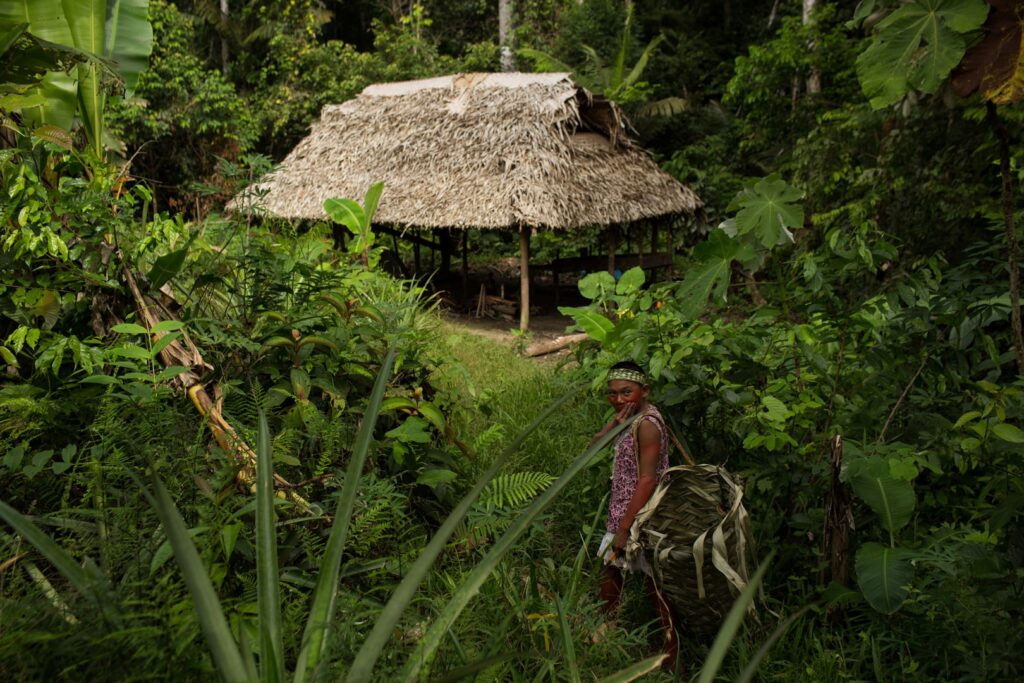
Indigenous communities view their land not as property, but as a responsibility and a core part of their identity. As described by Global Citizen, Indigenous groups sustain low deforestation rates through traditional knowledge and stewardship practices, while protecting more than 80% of the world’s remaining biodiversity. To protect their land, these communities rely on low-impact resource use, sustainable farming methods, and environmental monitoring. However, these systems are vulnerable to exploitation, displacement, and outside interference that jeopardizes both their survival and the forest itself without clear legal recognition of Indigenous land rights.
Recent research highlights the impact that protecting Indigenous lands would have on both environmental protection and the global climate. Scientists at the Environmental Defense Fund found that deforestation in the Amazon is close to an “irreversible tipping point,” creating a change in climate that influences global weather patterns. The analysis also shows that forests designated as Indigenous lands or protected areas undergo significantly lower rates of deforestation and carbon emissions than unprotected regions. Thus, while the Amazon is facing increasing development pressure, legal protection of Indigenous territories is one of the more effective tools for preventing environmental destruction and preserving harmony and stability within Indigenous communities.
Furthermore, the World Economic Forum analyzed reports concluding that Indigenous land rights play an important role in curbing deforestation and restoring forests damaged by external pressures. An author of the focus study says, “[g]ranting tenure to these Indigenous lands in Brazil is not only a really good human rights policy, but it’s actually a great environmental policy as well.” This presents a viable legal solution, reinforcing the idea that granting land rights is an effective means of long-term environmental stability. At the same time, granting tenure protects the rights of the Indigenous people to remain autonomous and live freely.
The Inter-American human rights community has recognized both the challenges Indigenous communities face and the environmental benefits of legally protecting Indigenous lands. In 2019, the Inter-American Commission on Human Rights held a hearing urging Brazil to protect Indigenous communities from fires, deforestation, and forced displacement. This response exhibits a regional understanding that environmental protection and human rights protection are entangled. Within the Inter-American framework, Indigenous land rights are legal obligations grounded in human dignity and sovereignty, not mere policy preferences. The solution already exists through Indigenous and protected land distinctions, which must be applied in the Amazon to safeguard both environmental resources and the Indigenous cultures that sustain them.


